


CASTING A HEAVY FLY
- Oct 15, 2025
- 2 min read
“Why can’t I cast this Clouser?” is a question I often get. “I am using my #8 rod and #8 line, and I have no control over it.” The misbehaving Clouser usually has big lead eyes and is very heavy. We all have experienced this problem at varying stages of our development.
To analyze the situation, we consider the equipment.
The rod
Of course, we use what we have, but soft rods are not ideal in the salt.
The line
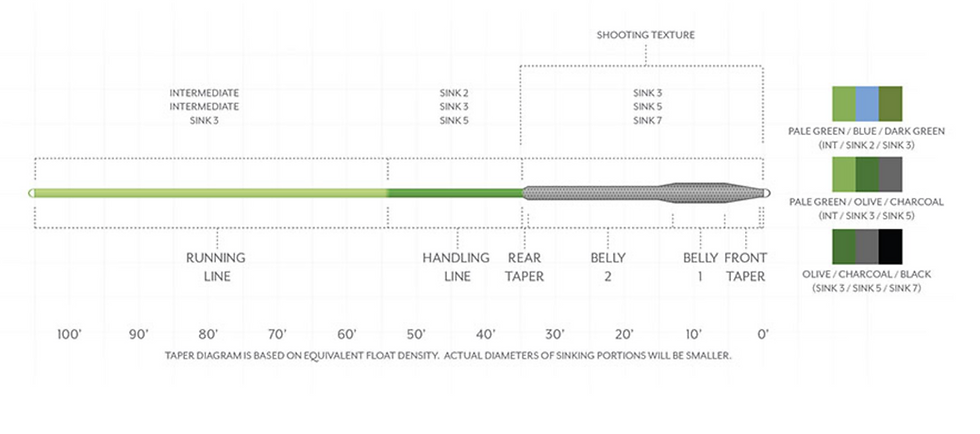
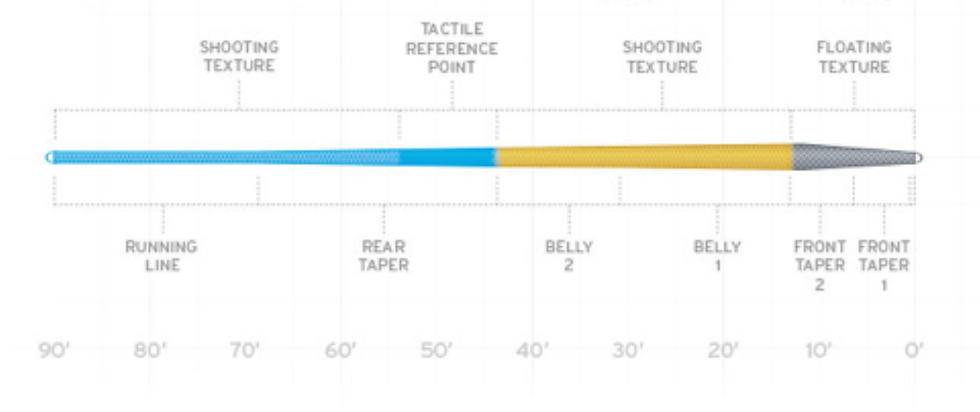
The line’s weight must match the fly's mass. So, it follows that the line could simply be too light for the fly and often is (Occam‘s razor). The shape of the fly line, especially the front taper, is important, and we don’t want a long forward taper. The key point is that any fly that resists moving because it is either heavy and/or very wind resistant requires a significant “pull“. The best way to achieve that is with a heavy line. The front taper must be powerful (short and/or heavy tip) to maintain as much energy as possible to have the necessary oomph to turn over a heavy fly, i.e. the line’s mass profile needs to be pushed forward.
The line’s head mass can be evenly distributed -

Sometimes the mass is pushed forward. A line like this is best for heavy flies.

The leader
The leader‘s butt end needs to be thick enough (more mass) to carry the force from the line through the leader to the fly. The length of the leader could be too long and often is. The leader needs to be massive and short enough to turn over a heavy fly. If the leader is too long, there is insufficient energy left in the leader to turn over that fly. So, a shorter leader is better suited to turn over a heavy fly.
Considering the casting technique
Because of its mass, the heavy fly's residual momentum will be substantial when cast with the standard technique. So, it will kick after a hard stop. Its momentum causes it to bounce, and now it becomes very difficult to, or impossible to, fashion a straight backcast. Thus, slack is introduced and control over the line is lost. It is very difficult to cast a line with a lot of slack in it. The rod doesn’t load properly, the line doesn’t accelerate because it isn’t straight. When there is a heavy fly at the end of the leader, all problems multiply. When a casting stroke starts, the line/leader must be as straight as possible.
By avoiding the stop, we can prevent the fly’s kick. We do this by using an oval path for the fly on the backcast and maintaining constant tension on the fly. Now, we swing the fly back horizontally and instead of casting straight back, we bring the rod tip up, thus swinging the fly upwards, and then commence the forward cast. This cast is called the Belgian cast.



Comments